ServicesHardwood Flooring
Hardwood Flooring in Houston
Hardwood moves with the moisture in the air, so we plan your install around it. We test the subfloor, let the wood settle into your home's conditions, and lay it so it stays flat and tight through damp summers and drier winters.
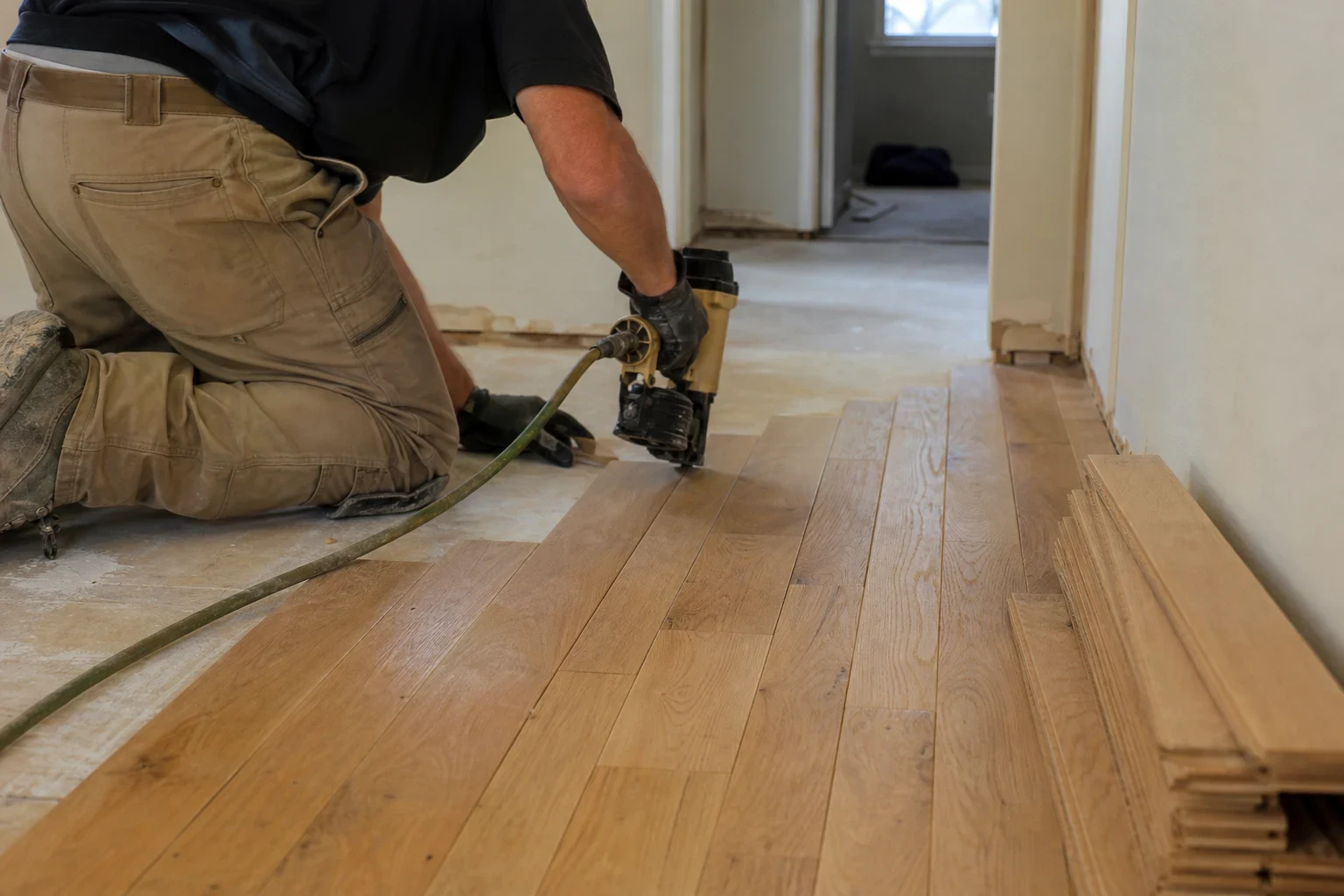
Real Wood, Installed for the Air It Lives In
Hardwood is a natural material. It takes on moisture when the air is humid and gives it back when the air dries out, swelling and shrinking a little each season. A floor that ignores this will cup, gap or squeak within a year or two. A floor that is planned for it can last decades.
That is why we treat timing as part of the job. Most homes around Houston sit on concrete slabs, and the long humid stretch from spring into fall puts steady moisture pressure on any wood laid over them. We help you pick between solid and engineered hardwood based on what is underneath your floor, then schedule the work so the boards go down when your home's indoor conditions are stable.
If hardwood turns out to be the wrong fit for a room, like a laundry area or a bathroom, we will say so and talk through options such as luxury vinyl plank or tile flooring instead.
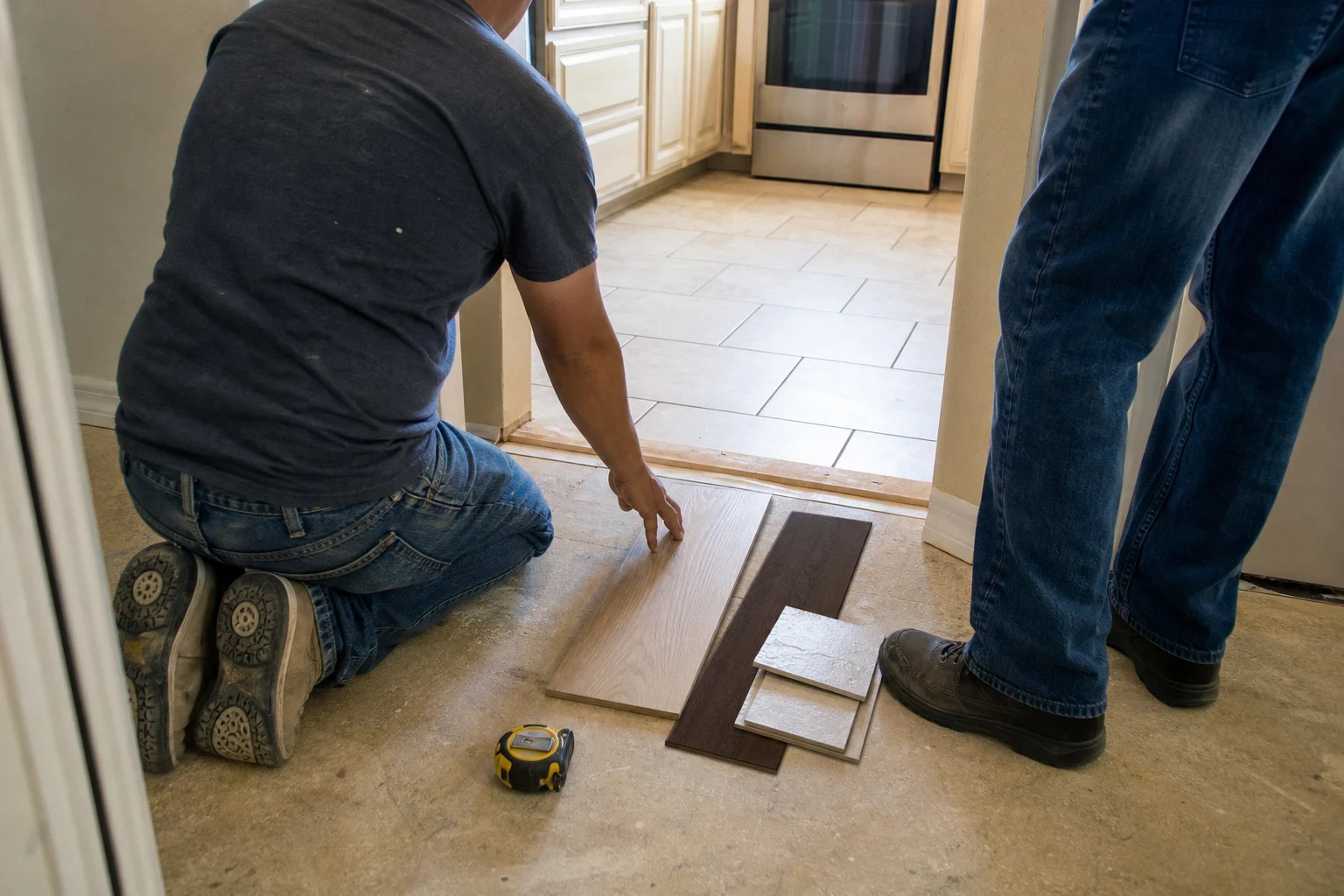
What Your Hardwood Install Includes
- 01
Subfloor moisture testing
We check the moisture level of your slab or wood subfloor before any boards arrive. The reading decides which installation method is safe and whether a vapor barrier is needed.
- 02
Help choosing solid or engineered
Solid hardwood works well over plywood on pier-and-beam homes. Engineered hardwood, with its layered core, handles slab moisture and seasonal swings with less movement. We explain the tradeoff in plain terms.
- 03
Acclimation in your home
The wood sits boxed or stacked in the rooms where it will be installed, with your air conditioning running as it normally would. We measure the boards against the subfloor before we start.
- 04
Old floor removal and leveling
We pull up existing carpet, vinyl or worn flooring, scrape adhesive, and grind or patch high and low spots. Hardwood needs a flat base to stay quiet underfoot.
- 05
Installation with expansion space
Boards are nailed, glued or floated depending on your subfloor, with a proper gap left at every wall so the floor has room to move in July.
- 06
Finished edges and a tidy room
Your baseboards and shoe molding go back on, or we put up new pieces if the old ones crack coming off. Thresholds into the next room are matched to the new floor height. Before we leave, the space is vacuumed so you can carry the furniture back in.
Questions about Hardwood Flooring?
Call(346) 746-6967Signs It's Time for New Hardwood
Boards cupping or crowning
Edges that rise above the center, or a center that humps up, usually mean moisture is getting into the wood. Often the original install skipped a vapor barrier or acclimation.
Gaps that never close
Small gaps that open in winter and close in summer are normal. Wide gaps that stay open all year point to boards that have shrunk for good or a failing fastening system.
Soft spots and loud squeaks
A floor that flexes or creaks in the same places has lost its grip on the subfloor. On older pier-and-beam homes the plywood underneath may also need attention.
Worn-through finish on prefinished boards
When the factory finish and wear layer are gone, there is little left to protect the wood. Replacement is usually the honest answer at that point.
Carpet you're ready to retire
Many people come to us wanting to swap tired carpet for wood before hosting season. That is a good reason too.
How Your Hardwood Project Runs
- 1
Start with a phone conversation
Share which rooms need new wood, what is down there now and the style you have in mind. We ask whether your home sits on a slab or pier and beam and when you would like the work done, then book a visit to measure.
- 2
Measure and test
At your home we measure every room, check subfloor moisture and flatness, and note anything that affects the job, like a step down or an old glue layer. You get your quote with each part listed.
- 3
Deliver and acclimate
The wood is delivered ahead of install day so it can adjust to your home. Keep the air conditioning or heat running as usual during this time.
- 4
Install day
First we cover walls and door frames along the path materials travel. The old flooring comes out, the base gets its final prep, and the new boards go down row by row. Most rooms stay usable around the work area, and we tell you which ones to keep clear.
- 5
Final walk-through
We walk the floor with you, fit the last trim pieces, clean up, and go over simple care tips for the humid and dry months.
What Moves the Price of Hardwood
Hardwood pricing depends far more on your home than on the square footage alone. A bedroom over a clean, dry slab and a matching bedroom over old glued-down tile turn out to be very different jobs. Your quote lists each of these so nothing shows up later as a surprise.
- Solid versus engineered
- Oak, hickory and maple sit at different price points. Wider planks, or a thicker top layer of real wood on engineered boards, push the material cost up per foot.
- Subfloor condition
- A dry, flat slab is quick to prep. High moisture readings, cracks or uneven spots call for barriers, patching or grinding first.
- Removal of the old floor
- Carpet comes up fast. Glued-down tile or old adhesive takes more labor and disposal.
- Layout and stairs
- Hallways, closets, angled walls and patterns like herringbone add cutting time. Stairs are a separate job priced with our stair flooring work.
Hardwood Flooring Questions
Can you put hardwood over a concrete slab?
Yes. On slabs we usually recommend engineered hardwood, glued down or floated over a moisture barrier. Solid hardwood can work over a slab only with a plywood subfloor added, which raises floor height and cost. We test the slab first and tell you what it can handle.
What time of year is best for installing hardwood?
Any season works if your home's indoor air is stable. What matters most is that the air conditioning is running normally and the house is closed up, so the wood acclimates to the conditions it will live in. We avoid installing right after big indoor changes, like a new HVAC system or fresh drywall that is still drying.
How long does the wood need to acclimate?
It depends on the product and on how far apart the wood and subfloor readings are when it arrives. Some engineered floors need little time, while solid boards often need several days. We check moisture readings rather than guessing by the calendar.
Is hardwood a good idea in a kitchen?
It can be, with a couple of habits. Wipe up spills right away and keep a mat in front of the sink. For a kitchen with heavy water use, luxury vinyl tile or tile flooring can be the safer pick in that room, with hardwood carrying on into the living areas.
What should I clear out of the rooms before install day?
Pack away small items, electronics and anything fragile ahead of time so nothing gets bumped. If a room holds something heavy, like a piano or a china cabinet, mention it during your call. That way we can work out how to handle it well before the crew shows up.
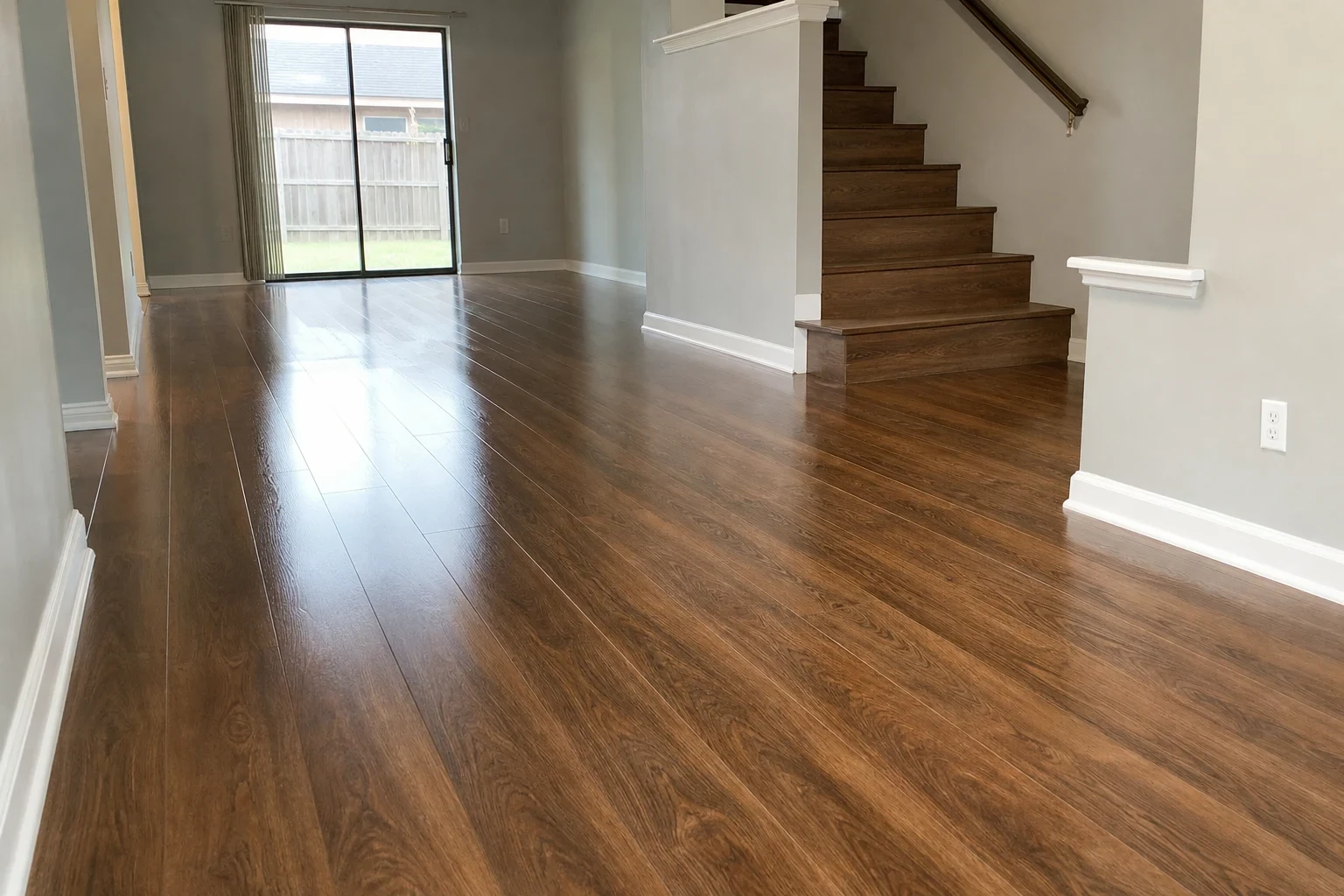
Ready for Wood Floors That Hold Up Year-Round
Tell us about your rooms and your foundation, and we will talk through solid versus engineered and the best timing for your install. Then we set up a visit to measure and test.