ServicesLuxury Vinyl Plank
Luxury Vinyl Plank Installation in Houston
Vinyl plank brings a wood-grain look into rooms where real wood would struggle: kitchens, baths and anywhere the dog comes in wet. We check your slab for moisture and flatness first, so your new floor is settled in and ready before the rainy months arrive.
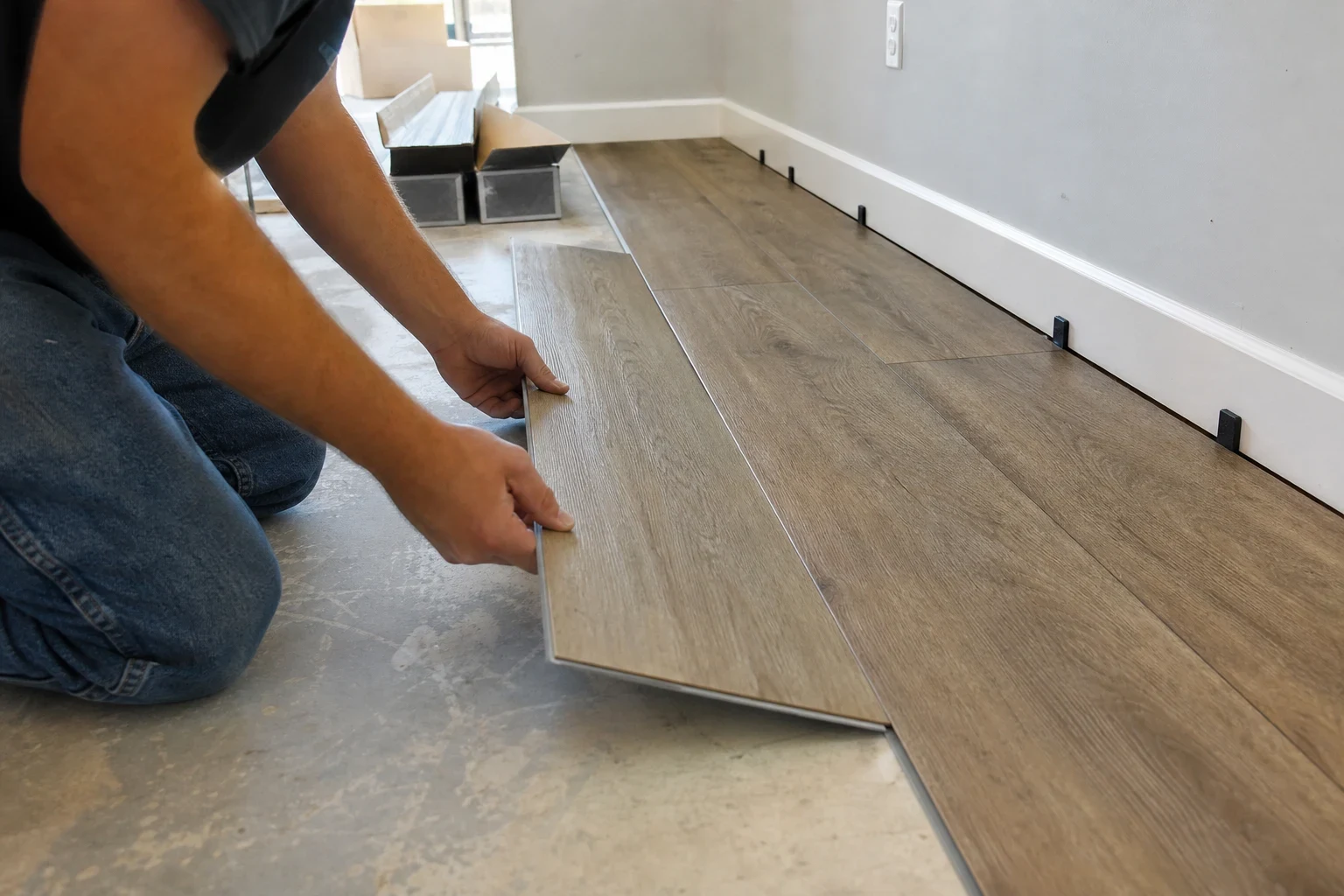
A Floor That Handles Spills, Pets and Humidity
LVP is built in layers. A rigid or flexible core sits at the bottom, a photographic wood pattern rides on top of it, and a clear wear layer protects that pattern from scuffs. Because the core does not soak up water, a spilled glass of tea or a pet accident wipes up without the seams puffing. That makes it a strong pick for kitchens, laundry rooms, bathrooms and the rooms your family uses hardest.
What lies beneath matters just as much. When we're asked to look at a vinyl floor that clicks, gaps or lifts at the edges, the cause is usually a slab with a low spot, concrete that wicks moisture, or planks butted tight against the walls with nowhere to move. We sort those things out before your floor goes in.
Timing is part of the plan too. Plenty of families want new floors down before storm season starts dragging wet shoes indoors, or before fall and holiday visitors, and we set the schedule with that in mind.
What Your Vinyl Plank Installation Includes
A moisture reading before anything is ordered
Concrete can hold more water than it looks like it does. We take readings across the slab, and when the numbers run high we put down a vapor barrier so that dampness never collects under your planks.
A flat, solid base
A click-lock floor flexes at the joints wherever the base dips or humps, and that is how seams start to open. We take down raised areas and build up hollows until the surface meets what your plank calls for, so it feels firm every time you walk across it.
Tear-out and haul-away
Carpet, pad, tack strip, old sheet vinyl or tile all come up and leave with us. Any thin-set or glue ridges left behind get ground smooth so they don't telegraph through.
The right pad for the plank
Some planks come with a pad already attached underneath, while others need a separate underlayment. We use what the manufacturer calls for, so sound control and moisture protection work the way the product was designed.
Trim, transitions and doors
We leave the proper expansion gap at walls, then cover it with baseboard or quarter round. Transitions meet tile and carpet cleanly, and we trim door jambs and undercut doors so they swing freely.
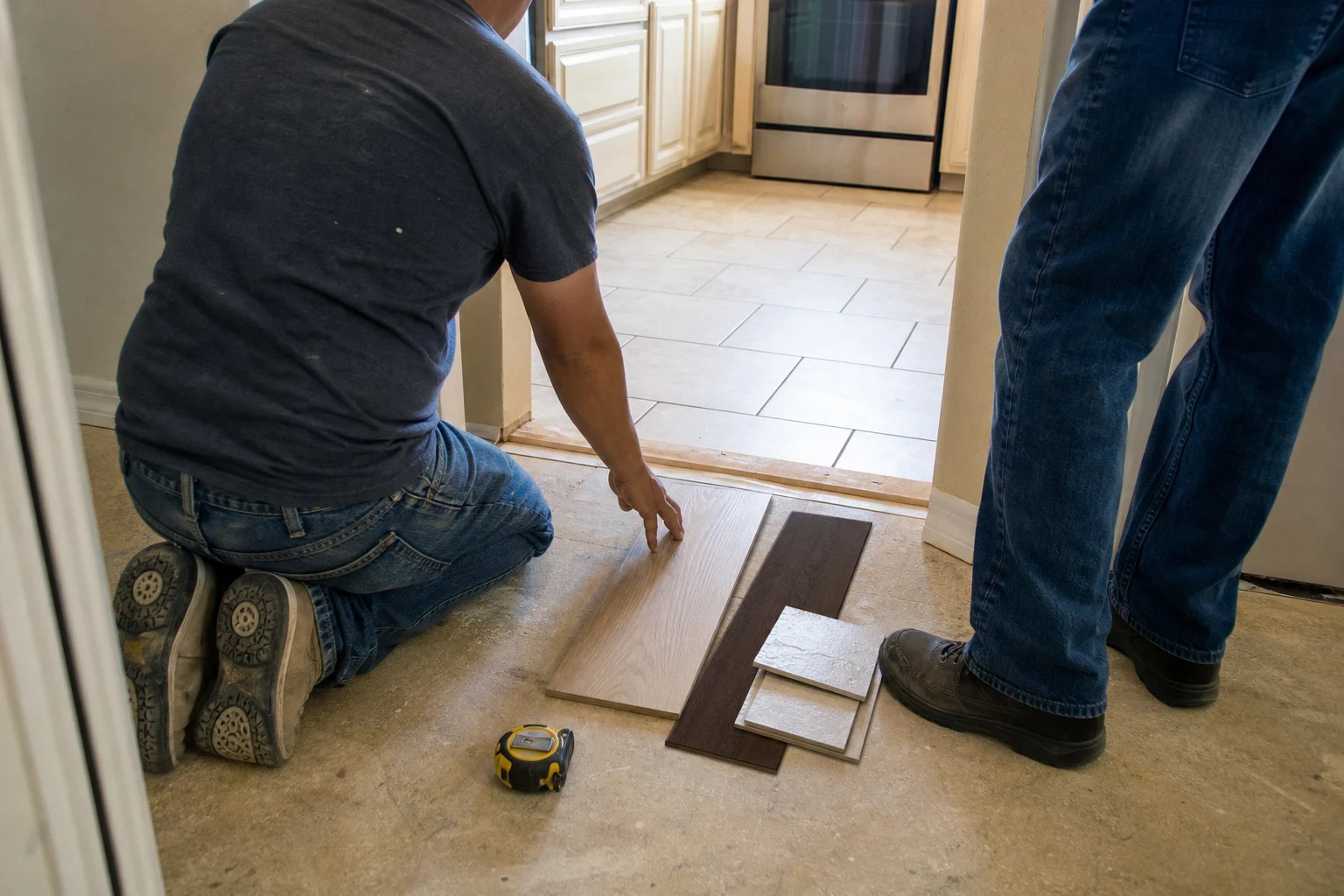
Signs Vinyl Plank Might Be Right for Your Home
- Carpet that holds odors
- Carpet in a humid climate can trap moisture, pet smells and allergens. Vinyl plank wipes clean and doesn't hold on to any of it.
- Swollen laminate near water
- If laminate edges have puffed up by the dishwasher or bathroom, the core has soaked up water. Vinyl plank holds up better in those spots.
- Cracked or hollow-sounding tile
- Loose or broken tile is often a sign of slab movement. Vinyl plank is more forgiving of minor shifts, once the base is prepared.
- Pets and kids wearing down your floors
- Scratches and wet paws are hard on many surfaces. A thicker wear layer stands up to daily traffic and is easy to keep clean.
- A move-in or sale on the calendar
- Vinyl plank goes in quickly and freshens a whole floor plan at once, which helps when you are on a deadline.
How Installation Day Works
- 1
Measuring and planning visit
We measure each room, check the slab and go over plank choices along with the timing that works for your family. Afterward you receive a written estimate that breaks out every part of the job.
- 2
Delivery and acclimation
The boxes arrive a couple of days ahead and rest in the rooms they're headed for. Leave the air conditioning on during that stretch so the planks adjust to your normal indoor temperature.
- 3
Prep and removal
We cover walkways, shift furniture, take up the old floor and get the subfloor ready. Leveling compound has to cure, so bigger jobs can run an extra day.
- 4
Installation and trim
Planks go down with staggered end joints and a gap at every wall, then trim and transitions finish the edges. Your furniture goes back where it was.
- 5
Final look and tidy-up
We clear out the scraps, vacuum the new floor and look it over together with you. With most floating floors, you can walk on the room that evening.
What Shapes the Cost of Vinyl Plank
The plank itself is only part of the price. Prep work and the shape of your floor plan often weigh just as heavily. Your written estimate shows each piece separately, so nothing comes as a surprise.
- Plank thickness and wear layer
- A thicker wear layer and rigid core cost more but hold up better to pets and heavy traffic. We'll tell you honestly when a thinner product is enough for a guest room.
- What the concrete needs
- Some slabs are ready almost as they are. Others have low spots, cracks or damp readings, and those call for leveling compound or a vapor barrier before the planks go down.
- What comes up first
- Carpet comes out quickly. Glued-down tile or old sheet vinyl takes longer and may leave adhesive that has to be ground off.
- Room layout and details
- Open floor plans go faster than many small rooms, closets and hallways. Stairs, which we cover under stair flooring, are priced separately.
Answers About Vinyl Plank Floors
- Will vinyl plank hold up to water in a kitchen or bathroom?
- Spills, pet accidents and damp mopping won't make the planks swell, because the core doesn't absorb water. What it can't do is stop a puddle that sits for hours, or a slow leak, from working through the joints to the concrete below. For everyday kitchen and bathroom use, it performs very well.
- Do you have to tear out my old tile first?
- Not always. Tile that is tight, level and has shallow grout lines can stay, and we skim the joints flat before floating the planks over it. Tile that is cracked or sounds hollow has to go. We'll let you know which situation you're in when we come out to measure.
- How long does a typical job take?
- A few connected rooms usually take one to two days once the planks have acclimated. Heavy leveling or tile removal can add time, and we'll give you a realistic schedule up front.
- Do I need to leave the house during installation?
- No. Most families stay home. We work room by room, and floating vinyl plank doesn't involve strong-smelling finishes, though removal can be noisy for part of the day.
- When is the best time of year to install?
- Any season works as long as your home is air conditioned or heated during and after installation. Many people schedule in spring or fall so the floor is in before summer storms or holiday company.
- How is vinyl plank different from luxury vinyl tile or laminate?
- Luxury vinyl tile uses the same material in square or stone-look shapes. Laminate has a wood-fiber core that handles water less well. We install all three and can help you compare them for each room.
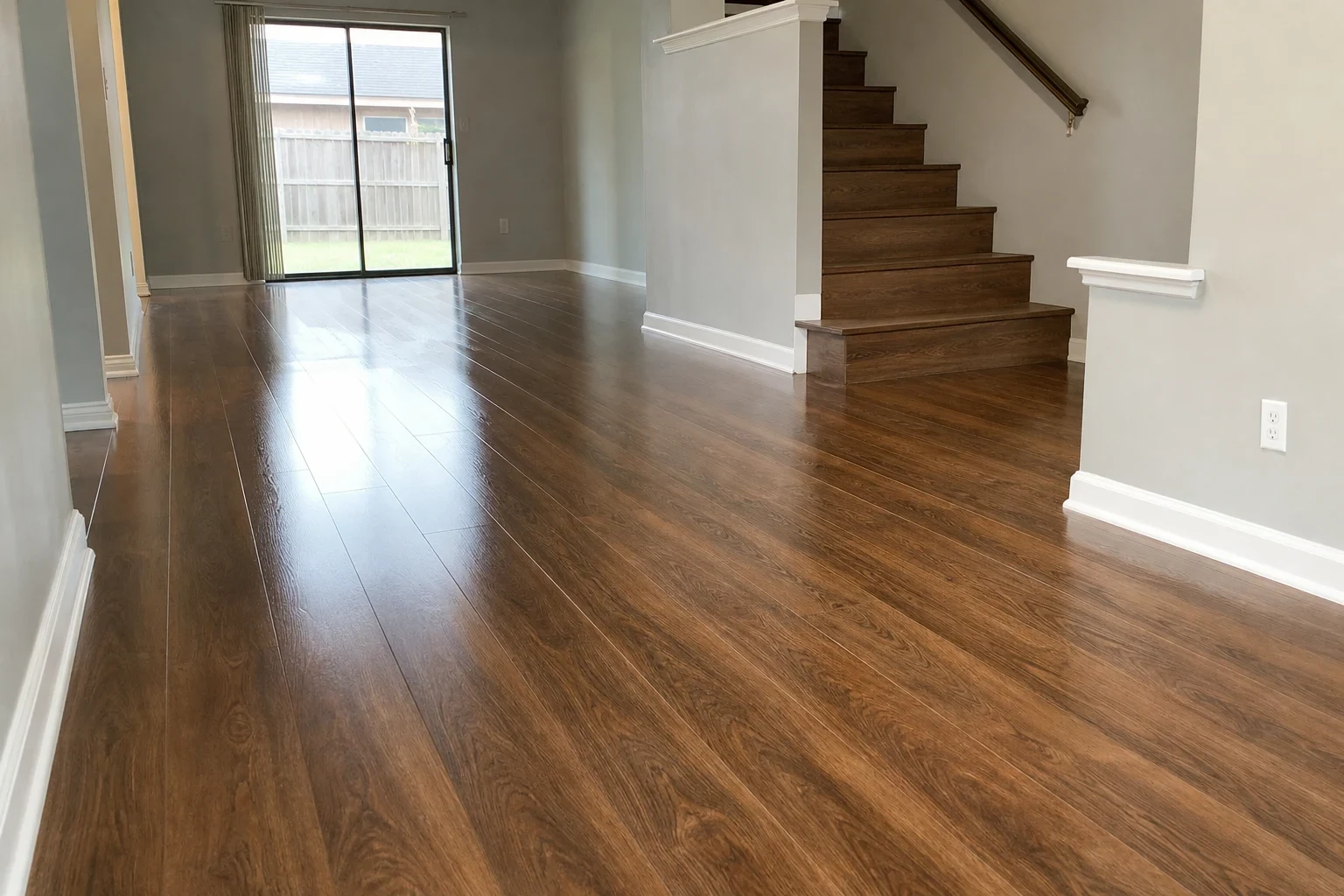
Ready for a Floor That Fits the Season Ahead
Tell us which rooms you're thinking about and when you'd like the work done. We'll set up a visit to measure, test your slab and walk you through plank choices.