ServicesVinyl Composition Tile
Vinyl Composition Tile in Houston
Vinyl composition tile is the tough, easy-to-patch floor you see in schools, and it works just as hard in your home. We install it in laundry rooms, playrooms, workshops and converted garages, on a slab we test and prepare first.
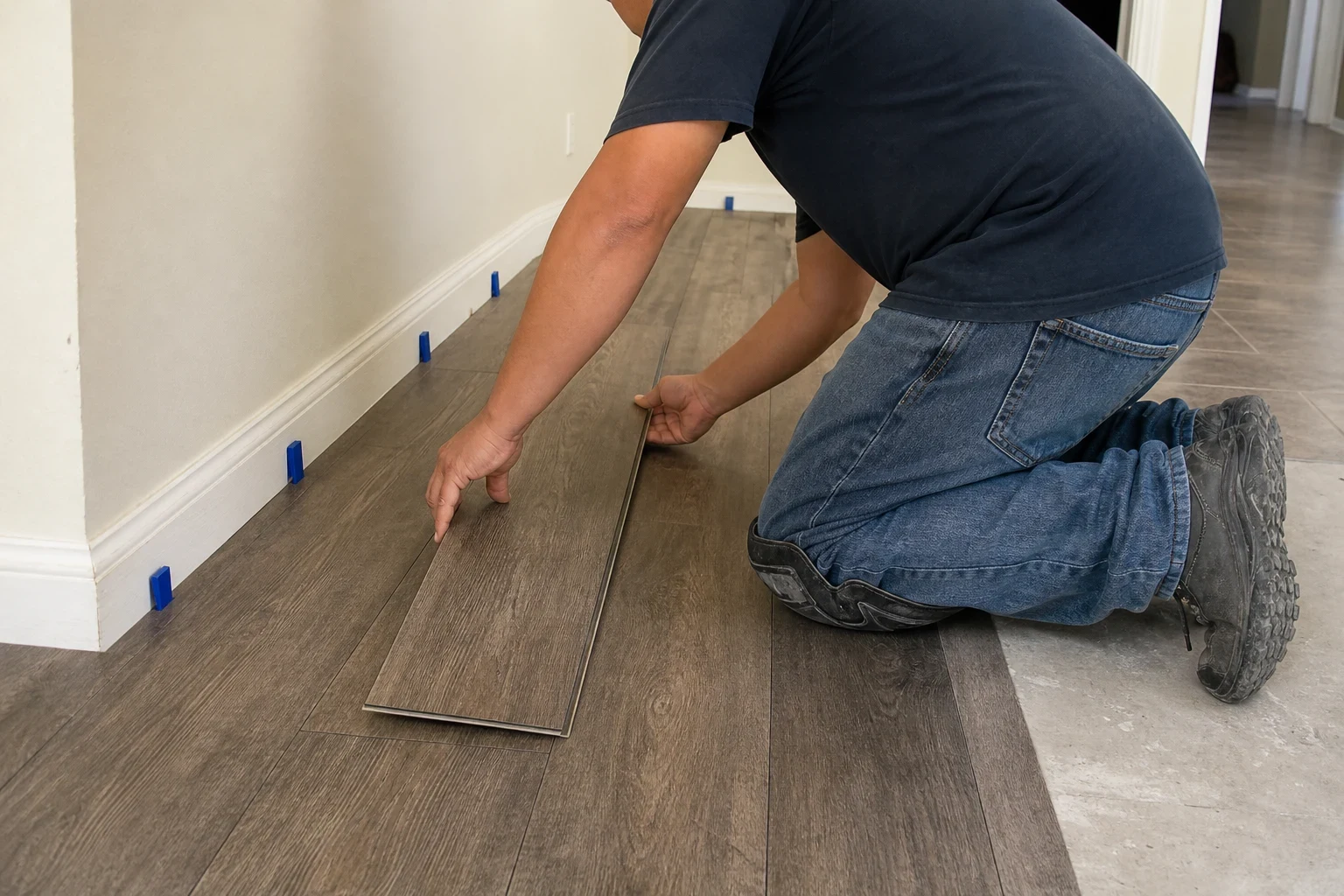
A practical floor for the hardest-working rooms
Vinyl composition tile, or VCT, is a 12-inch square made from limestone filler, vinyl resin and color pigment. It is glued directly to the subfloor and finished with a few coats of floor polish. It shrugs off rolling chairs, muddy shoes and dropped tools, and if one tile gets gouged, it can be cut out and replaced without touching the rest.
It is the right call when you want a durable, low-cost surface in a space that gets used hard, or when you like the classic checkerboard look in a kitchen or mudroom. It is not the best choice where you want a soft, warm feel underfoot or a floor that needs no upkeep. In those rooms, our luxury vinyl tile or luxury vinyl plank pages are worth a look.
We plan the timing with the seasons in mind. VCT adhesive cures best when the room is held at a steady temperature with the air conditioning running, so we like to schedule before the heaviest summer humidity sets in and avoid the weeks right after a big storm when slabs are still damp.
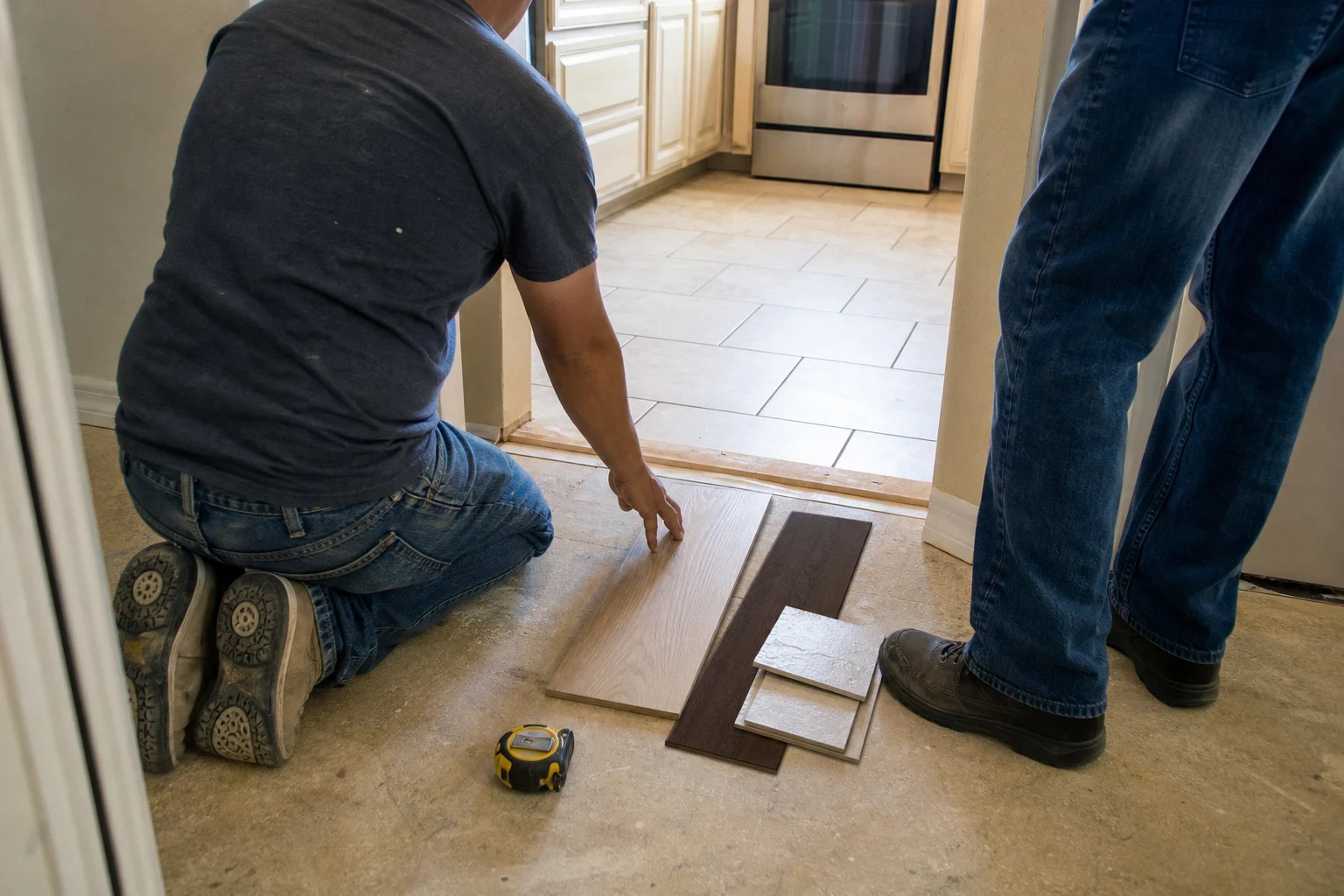
What we handle, from bare slab to final polish
- 01
Checking the concrete for moisture
Water vapor rising through a concrete foundation is the most common reason VCT glue fails, and slab foundations are the norm around Houston. We take readings before we price anything, so the plan is built around the floor you actually have.
- 02
Clearing out the old covering
Whatever is down now, whether that is carpet, sheet vinyl or tile laid in recent years, comes up and we cart the debris off for you. If you have old 9-inch tiles or black adhesive from decades back, we recommend having them tested before anyone disturbs them, and we will explain your options plainly.
- 03
Patching and leveling
Cracks, low spots and old glue ridges show right through thin tile. We grind, patch and skim the slab smooth so the finished floor lies flat.
- 04
Layout and installation
We snap lines from the center of the room so cuts at the walls are even. Tiles go into fresh adhesive, get rolled to seat them, and are set with the grain arrows running the way you choose.
- 05
Polish and finish
Once the adhesive has set, we clean the floor and apply coats of polish to seal the surface and bring up the shine.
- 06
Trim and cleanup
We reset or add base molding and transitions at doorways, then sweep and clean up so the room is ready to use.
Questions about Vinyl Composition Tile?
Call(346) 746-6967Signs it is time for new VCT
Tiles popping loose
Corners curling up or tiles that shift underfoot usually mean the old adhesive has failed, often from moisture below.
A dull floor that will not shine
When stripping and polishing no longer brings the surface back, the tile itself is worn through.
Cracks along a line
A row of cracked tiles often follows a crack in the slab beneath. That needs patching before new tile goes down.
A garage becoming a living space
Converting a garage into a playroom, gym or workshop is a perfect fit for VCT, since it handles heavy use and costs less than most hard floors.
Getting ahead of the busy season
If the laundry room or back entry takes a beating every rainy spring, replacing a tired floor during the drier months means it is set and sealed before the wet weather returns.
How the job runs
- 1
Your call and a visit
We talk through the room and how you use it, then come out to measure and test the slab. You get a written estimate that lists each part of the work.
- 2
Preparing the room
On install day we protect nearby floors and walls, remove the old covering and prep the concrete. Prep is often the longest part of the job.
- 3
Setting the tile
Adhesive goes down in sections, tiles are laid to the layout lines, and the whole floor is rolled. A typical laundry room or small playroom is usually laid in a day.
- 4
Curing and polishing
We ask that you keep the air conditioning running and stay off the floor with heavy furniture for a short time. Then we return to apply polish and show you how to care for it.
What moves the price of VCT
VCT is one of the more affordable hard floors, but the tile itself is only part of the cost. The condition of your slab and what has to come up first usually make the biggest difference. We price each job after seeing the room so the number you hear holds up.
- Size and shape of the room
- Square footage sets the material, but closets, angles and lots of doorways add cutting time.
- What is on the floor now
- Carpet comes up quickly. Glued sheet vinyl, ceramic tile or old flooring that needs testing takes more labor.
- Slab condition and moisture
- Deep cracks, uneven spots or high moisture readings may call for extra patching or a moisture-blocking primer.
- Pattern and color choices
- A single color goes fastest. Checkerboards, borders and inlaid stripes take more layout and cutting.
- Finish coats
- More coats of polish give a harder, glossier surface and add a little time to the job.
Your questions about vinyl composition tile
How is VCT different from luxury vinyl tile?
They are two separate products. VCT is thin, hard and glued down, and it depends on polish to protect its surface. Luxury vinyl tile is thicker, carries a printed wear layer and never needs polish. VCT is the budget-friendly workhorse, while LVT does a better job of imitating stone or wood and asks less of you in upkeep.
How do I keep VCT looking good?
Grit is what dulls the polish, so run a dry dust mop over the floor a few times a week. For spills and scuffs, a damp mop with a pH-neutral cleaner does the job. Every so often the polish gets a fresh coat, and every few years it is stripped and reapplied. We walk you through this when the job is done.
Can you put VCT over my old tile?
Sometimes. If the old floor is stuck down tight, flat and a single layer, we may be able to prepare it and go over it. If it is loose, cracked or uneven, it needs to come up so the new tile lies flat.
My house has old 9-inch floor tiles. Can you just pull them up?
Older 9-inch tiles and black mastic can contain asbestos, so we recommend testing before anyone removes them. Depending on the results, covering them in place is sometimes an option. We will tell you what we see and what makes sense.
Will humidity affect my new floor?
Humidity mainly matters while the adhesive cures and when moisture rises through the slab. That is why we test the concrete first and ask you to keep the air conditioning on during and after the install. Once set and polished, VCT handles damp seasons well.
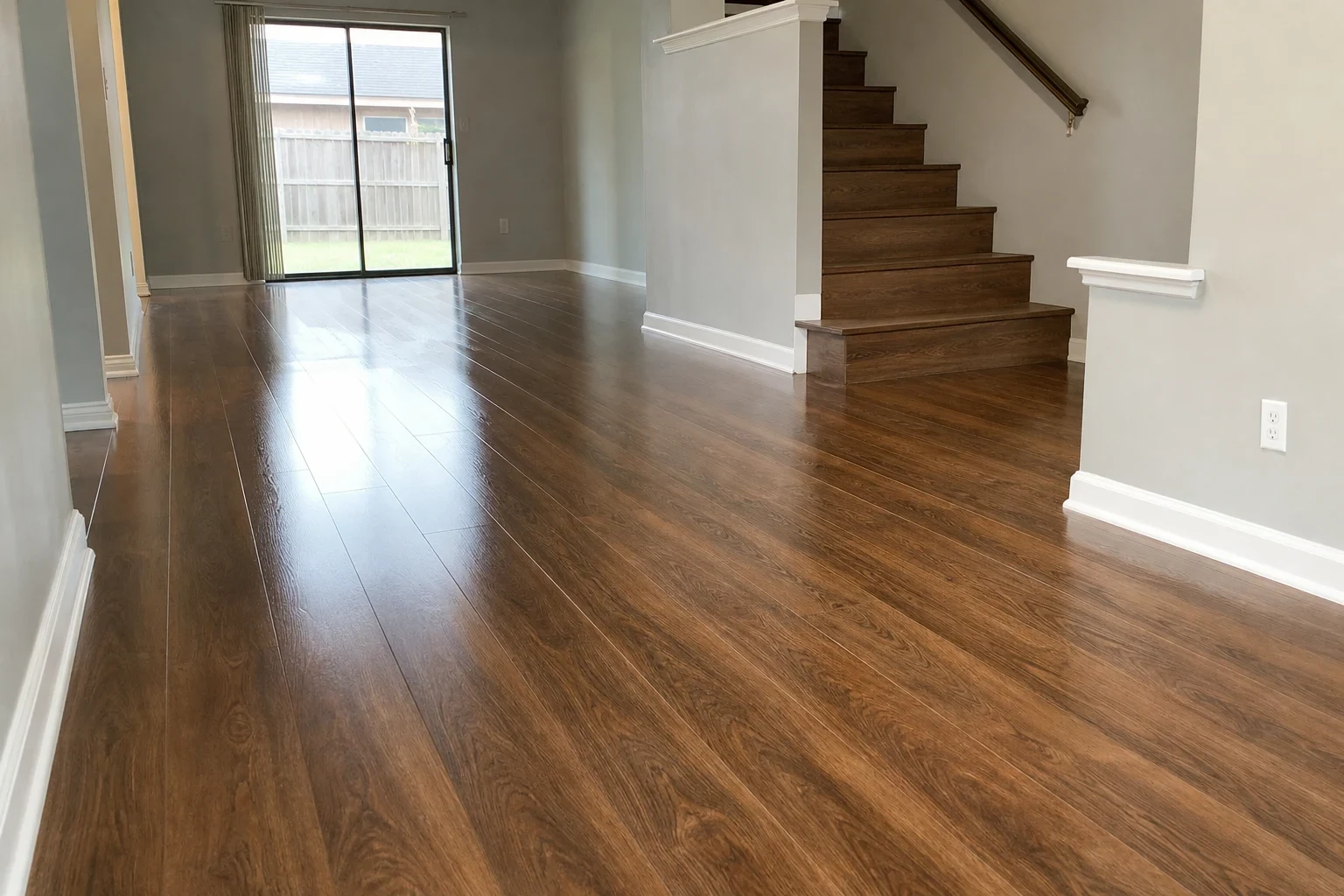
Let's get your VCT floor down before the weather turns
Describe the room and what goes on in it day to day. We will find a time to measure, check the slab and schedule the install around the season ahead.