ServicesTile Flooring
Tile Flooring in Houston
Porcelain or ceramic tile suits the rooms in your home that see the most water and foot traffic. We flatten the slab, add crack isolation where it's needed and bed each tile in full mortar, so your floor is cured and ready before the next busy season arrives.
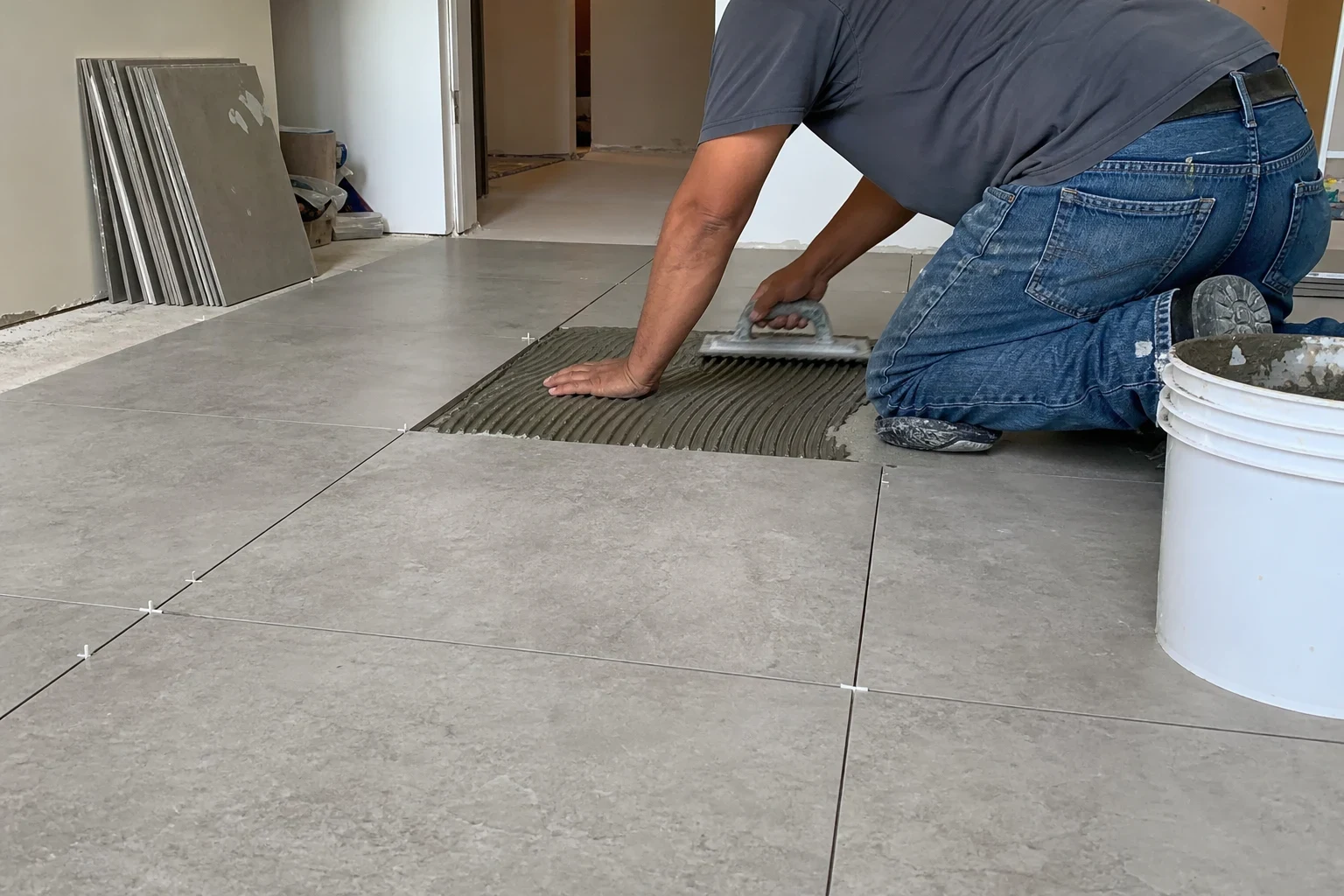
When tile is the right floor for your home
Tile holds up to water, muddy shoes, pets and heavy traffic better than almost anything else you can put down. It stays cool underfoot through a long summer, and a good porcelain will look the same in twenty years as it does the week we grout it.
It is also the least forgiving floor to install. A slab that dips a quarter inch, a hairline crack that keeps moving, or mortar spread too thin will show up later as hollow spots, cracked tiles or lippage you catch with your toe. Most of our work happens before the first tile goes down.
Timing matters too. Thinset and grout need dry, steady conditions to cure, and nobody wants a torn-up kitchen the week family arrives. We help you pick a window that fits your calendar and the weather, whether that's spring before the heat or fall before the holidays.
What a tile installation with us includes
Tear-out and haul-away
We remove old carpet, vinyl, laminate or tile and take it with us. Removing old tile is dusty work, so we seal doorways and cover vents first.
Slab check and leveling
We run a long straightedge across the floor and mark high and low spots. Highs get ground down, lows get self-leveler, so large tiles sit flat.
Crack-isolation membrane
Concrete slabs here shift with the clay soil underneath. Over existing cracks or the whole floor, a membrane lets the slab move without the crack traveling up into your tile.
Layout before setting
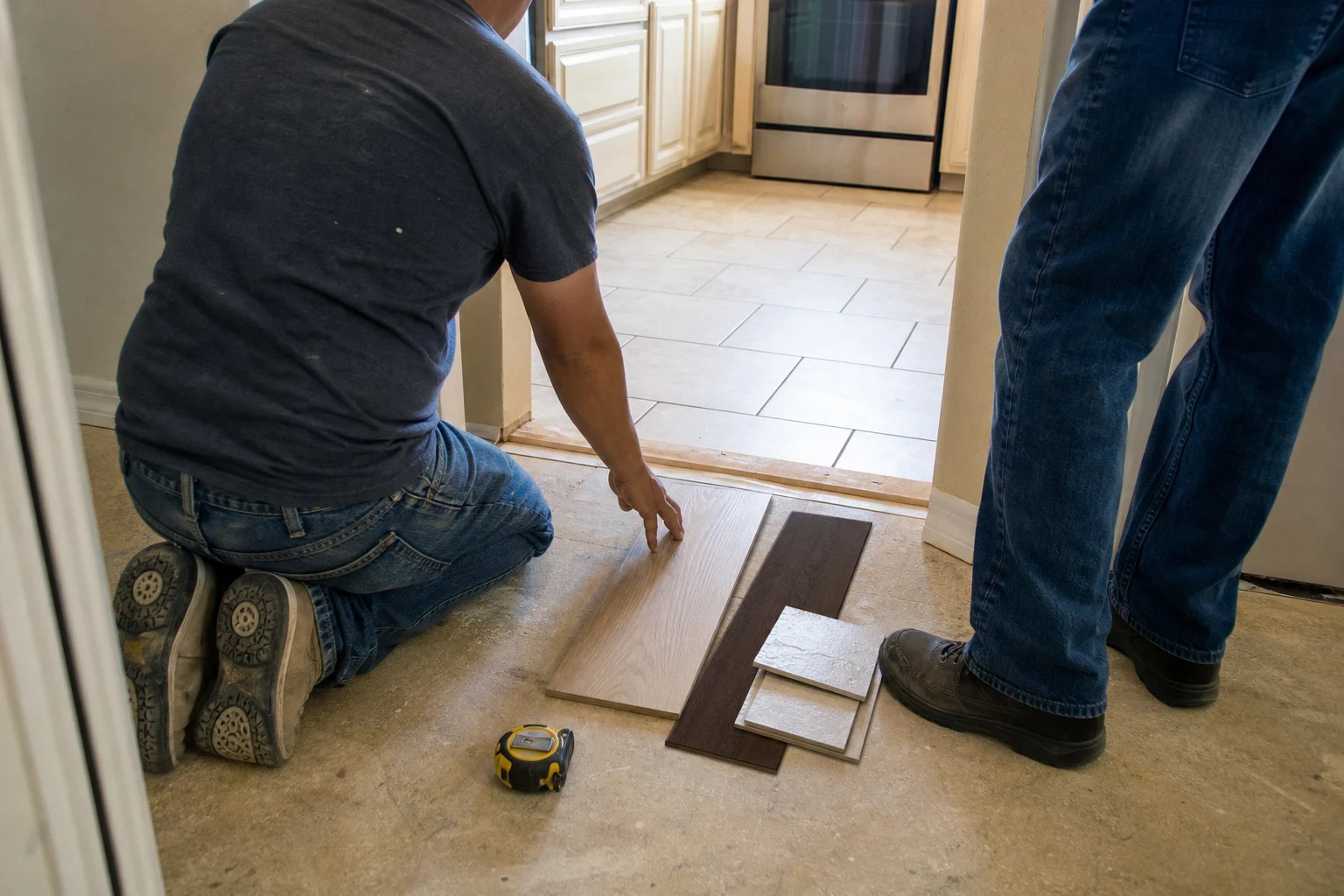
We dry-lay the pattern so cuts land at walls and cabinets instead of the middle of a doorway, and you approve it before we mix any mortar.
Setting, grouting and sealing
Tiles go down with full mortar coverage and leveling clips on larger formats. We grout, clean the haze, seal cement grout, and leave soft movement joints at the walls.
Trim, transitions and cleanup
We fit thresholds where tile meets other floors, reset baseboards or shoe molding, and vacuum and wipe down before we leave.
Signs your floor is ready for new tile
- Cracked or loose tiles
- A tile that clicks or sounds hollow when you tap it has let go of the mortar underneath. Usually the neighbors are next, and water can get underneath.
- Grout that won't come clean
- Dark, crumbling or missing grout lets moisture and dirt into the joints. When scrubbing no longer helps, replacing the floor often makes more sense than chasing joints.
- Swelling or peeling near water
- Laminate or vinyl lifting by the dishwasher, tub or back door is a sign that room needs a floor that can handle water.
- A room that stays muggy
- Carpet in a laundry room, mudroom or bath holds humidity and smells musty. Tile dries out fast and wipes clean.
- Getting ready to sell or host
- New tile in the kitchen or entry is one of the first things buyers and guests notice. Starting a few months ahead leaves room for curing and trim work.
How your tile project runs
- 1
Talk it through by phone
Tell us the rooms, the tile you're considering and when you'd like it done. We'll ask about what's on the floor now and set a time to measure.
- 2
Measure and slab check
We measure each room, check how flat the slab is, and look for cracks or moisture. You get a written estimate listing tear-out, prep, materials and labor separately.
- 3
Prep day
We protect cabinets and doorways, remove the old floor, and level and patch the slab. Membrane goes down where we agreed.
- 4
Setting and grouting
Most rooms take one to three days to set, depending on size and pattern. Grout goes in once the thinset has cured, usually the next day.
- 5
Cure and walkthrough
Light foot traffic is fine within a day or so of grouting. We ask you to wait about three days before rolling heavy furniture back, then walk the floor with you.
What moves the price of your tile project
Two kitchens of the same size can land at quite different numbers once we've looked at the slab and the tile you've chosen. That's why we quote after measuring rather than from a chart. Your written estimate breaks out each part so you can see where the money goes.
- Tile type and size
- Porcelain costs more than ceramic and is harder to cut. Large-format and plank tiles need a flatter floor and more careful setting, which adds prep time.
- What comes out first
- Carpet comes up fast. Old tile set in a thick mortar bed has to be chipped out piece by piece, which adds hours to prep day and leaves a bigger pile to dispose of.
- Slab condition
- A flat, sound slab needs little prep. Dips, humps and active cracks call for grinding, self-leveler or membrane.
- Pattern and cuts
- A straight lay is the most efficient. Herringbone, diagonal or a lot of cuts around islands and doorways add labor and waste.
Tile flooring questions we hear often
- Should I choose porcelain or ceramic?
- For floors, we usually point people toward porcelain. It's denser, absorbs less water and resists chipping better, which matters in kitchens, entries and baths. Ceramic works fine in lighter-traffic rooms and costs less. We'll show you both and tell you which we'd use in your room.
- Will my slab crack my new tile?
- Concrete moves a little over time, and a crack in the slab can carry right up through tile laid directly over it. During the measure we look for those cracks, and where we find them we put down a crack-isolation membrane before any tile is set. The membrane won't keep the slab still, but it gives that movement somewhere to go other than your tile.
- How long will my kitchen be out of use?
- For an average kitchen, plan on a few days from tear-out to grout, plus about a day before you walk on it normally. Ahead of the job, we'll go over which rooms are closed on which days, so meals and pets can be sorted out early.
- Is there a best time of year to install tile?
- Tile can go in any time of year inside a climate-controlled home. We like to keep the air conditioning running during the job so mortar and grout cure evenly. The real question is your calendar, so we suggest booking a few months before holidays or a planned move.
- Do I need to seal the grout?
- Standard cement grout should be sealed, and we do that as part of the job. Resealing every year or two in kitchens and baths helps it resist stains. If you'd rather skip that, ask us about grouts that don't need sealing.
Get your tile in before the season gets busy
Tell us which rooms you're thinking about and when you need them done. We'll measure, check your slab, and give you a written estimate and a schedule that works with your calendar.